Where I Have Been

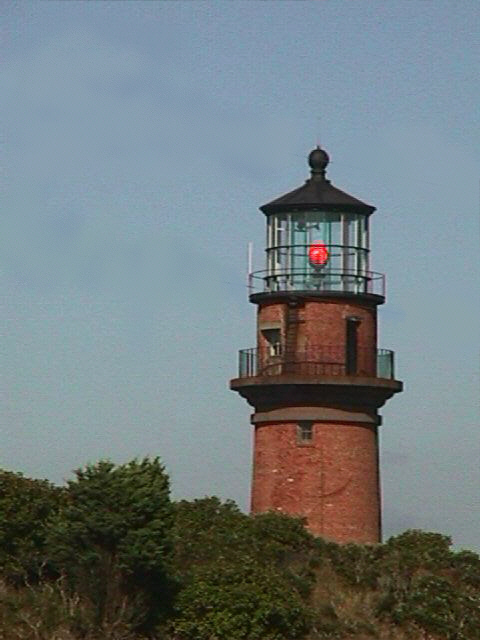
gay head wirelessI’ve been — still am, and probably won’t be at home with my main machine and good connectivity until sometime Monday — on Martha’s Vineyard with the Viable Paradise workshop, which is an intense and often transformative experience, even for the instructors.  Spending a solid week talking about almost nothing except writing, because even the conversations about everything else tend to circle back to writing in the end, is energizing in the very best way.

Things learned this year include:  sliced potatoes baked with sea salt, olive oil, and rosemary are the food of the gods; moments of sudden insight strike people in all sorts of ways; Shakespeare’s The Merry Wives of Windsor may well be the filthiest play ever written, and also one of the most hilarious.

Applications for next year’s VP open on 1 January 2014.

Tell Me, Dr. Doyle…

…why aren’t you posting very much this week?

Because I’m on the island of Martha’s Vineyard, getting reading to be one of the instructors for this year’s Viable Paradise Writer’s Workshop.  The workshop is a great deal of fun, but it’s also a great deal of work — it takes up not just time, but mental processing power.

For your amusement, though, have a nice rant about MS Word from science fiction writer Charlie Stross.  I’m a WordPerfect fan myself (they will take away my Reveal Codes window when they pry it from my cold dead fingers), but I use Word for my editing work because just about everybody else uses it; either that, or they use some obscure personal favorite and export the files to Word when they want to share them.   I don’t think anybody really likes Word; at best, they feel about Word the way I feel about Windows computers . . . they do what I want, and nobody expects me to be in love with them.   (Say bad things about Windows, and nobody cares.  Say bad things about the Mac interface, and the Mac users make sad puppy eyes at you because you’re being mean.)


Some Things Never Change

The life of the artist has always been a precarious one, financially speaking.  Geoffrey Chaucer was not exempt from its ups and downs.  The Canterbury Tales poet depended for cash on annuities that had been granted to him by Richard II, and when Henry IV took the throne in a regime change that ended with Richard II dying in prison, Chaucer was understandably concerned about the continuation of his stipend.

Reminding a king that he owes you money is tricky under any circumstances; doing so when the money was promised to you by the recently-deposed previous monarch is something beyond tricky.  Fortunately for Chaucer, he had an in:  His wife Philippa was the sister of Henry IV’s father’s last wife (and long-time mistress) Katharine Swynford, which made him sort-of family.  Close enough, at any rate, that Chaucer felt he could get away with giving the new king a gentle nudge.

So here’s Chaucer, addressing not the king, but the artist’s true love, his currently-flat wallet:

To yow, my purs, and to non othir wyght
Complayne I, for ye ben my lady dere!
I am so sory, now that ye been lyght;
For certes, but yf ye make me hevy chere,
Me were as leef be leyd upon my bere;
For which unto your mercy thus I crye,
Beth hevy ayeyn, or elles mot I dye!

Now voucheth sauf this day, or hyt be nyght,
That I of yow the blisful soun may here,
Or se your colour lyk the sonne bryght,
That of yelownesse had never pere.
Ye be my lyf, ye be myne hertes stere,
Quene of comfort and of gode companye;
Beth hevy ayeyn, or elles mot I dye!

Now purs, that ben to me my lyves lyght
And saveour, as doun in this worlde here,
Out of this towne helpe me thurgh your myght,
Syn that ye wylle nat ben my tresorere;
For I am shave as nye as any frere.
But yet I prey unto youre curtesye,
Beth heavy ayeyn, or elles mot I dye!

Lenvoy de Chaucer

O conqueror of Brutes Albyoun,
Which that by lyne and fre eleccion
Ben verray kyng, this song to you I sende;
And ye, that mowen alle oure harmes amende,
Have mynde upon my supplicacioun.

The poem worked; Chaucer got his money.

(For a modern English translation, go here; it’s the fourth poem down.)
Today’s Link of Interest

Another take on the whole worldbuilding question:  Chuck Wendig’s 25 Things You Should Know about Worldbuilding.

(What have we been doing the past couple of days when I wasn’t posting?  Well, dealing with the mini-van hitting a moose halfway between here and Oxford, Maine.  Moose collisions . . . are a thing, up here.  Even a low-speed glancing collision, like this one was, can do some serious damage — there’s nothing quite like having something the approximate size and shape of a Hereford steer on stilts slamming into your windshield to put the capper on an otherwise perfect day.  But nobody was hurt, except maybe for the moose, which ambled off into the woods before its state of health could be ascertained, and the mini-van is repairable, so once the adrenaline has quit pumping, all will be well.)


Thunder and Lightning

It was a dark and stormy night. . . .

You know, the first time that was used as a novel opener, it wasn’t a cliche.  It was all the imitators that came afterwards that made it tired and hokey.

And “dark night” wasn’t redundant, either, in an era when urban skyglow hadn’t yet blinded large numbers of people to the differences possible in a night-time sky.  A clear night with a full moon is a whole lot brighter than a cloudy night with a waning moon or no moon at all.  (There’s a reason why night-time assemblies of all sorts — dances, lodge meetings, and the like — used to be held on full-moon nights.  That way, people would be able to see the road on their way home.)

And right now, outside, it is indeed a dark and stormy night.  The crescent moon is completely obscured by clouds, and we’ve had thunderstorms rumbling through all evening.  The local volunteer fire departments have been called out at least twice for lightning strikes and downed trees smouldering on the power lines, and while we haven’t ourselves gotten any hail, other parts of the state haven’t been so lucky.

You could begin a novel with a night like this, if it hadn’t already been done.

Look What the Postman Brought

One of the small pleasures of a writer’s life is the arrival of author’s comp copies in the mail.  The new-book smell, the solid heft of the real and physical object, the gratifying appearance of one’s name and words in crisp black type . . . there’s nothing quite like it, and it never really gets old.

Today’s mail included our comp copies of the Thomas Easton and Judith K. Dial anthology Impossible Futures, which contains our short story, “According to the Rule.”  We think the anthology looks nifty-keen, especially the cover art:

(This has been a shameless plug.  Buy one; better still, buy a dozen.  They’re just the right thickness to shim up that short table leg that’s been driving you crazy for months now . . . .)

Sultry Weather

Hot and humid, with thunderstorms happening in random places that aren’t here.

Not good weather for thinking, or for writing.  Summer in general isn’t.  Spring and fall are the best times, and the shoulders of winter.  Deep winter is almost as bad as summer, because (as I’ve said here at least once) the answer to “How warm can you keep a nine-room house with a full basement in deep snow country” is “Never quite warm enough.”

It could be worse–a couple of years ago at about this time, we were dodging the remnants of Hurricane Irene on its way up the Connecticut River Valley, on our way down to Massachusetts to return one of our two remaining offspring to college.  He attracts weird weather like that; when we moved him in for the first time as a mid-year transfer student, we ended up fighting our way through a massive snow storm that blanketed the east coast from Washington up through Maine.

Oh, well.  Back to work, heat or no heat.

More Simple Cookery for the Deadlined and Overworked

The only difficult part of this recipe isn’t actually difficult at all, just a bit fiddly — if cutting up a whole head of cabbage into thin strips and turning three or four carrots into matchsticks takes more time or attention than you have at the moment, save it for another day.

Pork and Cabbage Stir-Fry

1 head of cabbage, cut into strips
3 T peanut oil, give or take
2 or 3 carrots, cut into matchsticks
1-2 pounds pork tenderloin, cut in thin slices
2 tablespoons minced ginger
1 cup chicken broth, divided (3/4 and 1/4)
1/4 cup soy sauce
shot of sriracha

Directions:

In a large wok (or a deep skillet, or a dutch oven; but a wok works best), stir-fry the cabbage and carrots in hot oil for about 6 minutes, until the carrots are crisp-tender. Remove and keep warm.

Stir-fry the pork in the remaining oil for 2 minutes — add a bit more oil if you need to. Add the ginger and stir-fry for 2 more minutes or until the pork is lightly browned. (“Lightly browned” pork is actually a kind of pale grey.  What they actually mean is, “no pink showing.”  Thin slices of tenderloin reach this stage quickly.)

Stir in the 3/4 cup of chicken broth and the soy sauce. Bring to a boil. Reduce the heat; cover and simmer for 3 minutes or until the meat juices run clear.  Combine the cornstarch and the remaining broth until smooth. Gradually stir into the wok.

Return the cabbage and carrots to the wok.  Add a squirt of sriracha.  (If you don’t have a source of sriracha where you are, I have a suspicion that a healthy shot of Tabasco, while non-canonical, would have a similar effect.)  Bring everything to a boil; cook and stir for 2-3 more minutes or until the sauce is thickened.

Serve over rice.

Not All Here

If things are a bit scattered around here at the moment, it’s because of the traditional end-of-summer flailing-about attendant upon getting the remaining offspring out of the house and off to school — one to graduate school at Rutgers (library science) and the other to his senior year at Curry College.

It only seems, sometimes, that we’ve been putting kids through college for roughly forever; in fact, it’s only been about thirteen years.  But that’s still a good long time.

I’m incredibly proud of my offspring, just the same.  They’re good kids, and they’ve always been incredibly patient with the vagaries and vicissitudes of having freelance writers for parents.

Everybody Has Their Own Ten Rules

Writers like making up “My Ten Rules for Writing” lists (heck, I’ve done it, right here), and other writers like reading and arguing with them.  I’ve said before that I suspect the liking has less to do with a desire for advice and more with a desire for company (“See!  Somebody else thinks this is important, too!”), but even the most wrong-headed List of Ten can provide a useful insight or two.

Today’s noteworthy list is over at the Paris Review tumblr:  Geoff Dyer’s Ten Rules for Writing Fiction.  It’s the usual mix of universal and idiosyncratic, helpful and what-was-he-thinking.  The rule that stuck out, for me, was the second one:  “Don’t write in public places.”  I’ve seen other writers’ lists with the same caveat (coffee shops are often singled out); on the other hand, I’ve seen or heard other writers talking about how writing in cafes and coffee shops was their salvation.  J. K. Rowling, famously, wrote her first Harry Potter novel in a cafe in Edinburgh; the humorist and playwright Jean Kerr used to resort to writing in the front seat of the family station wagon.  Of course, what counts as a public or a private place can differ from writer to writer: a naturally gregarious and easily distracted person might need a quiet office with a closed door in order to get stuff done; a writing mom with a house full of noisy children and nonstop demands on her attention might find an hour a day at the neighborhood Starbucks to be an oasis of sweet privacy.

(More thoughts on public/private writing spaces can be found here.  For the curious, I found the link by Googling “Jean Kerr writing station wagon”.)

Everybody’s different.  But it’s telling, I think, that the one rule most lists have in common is “Keep on writing.”