Lo! A Review!

Speaking as an editor and instructor of writers, one should never obsess over reviews, because that way madness lies.

On the other hand, there’s nothing like a good review to brighten a writer’s day.  If you’re friends with a writer, and spot a good review of their work, it’s an act of kindness to let them know about it.  If you spot a bad review, don’t bother – even if it’s one of those completely off-the-wall, did-the-reader-even-read-the-story bad reviews – because for one thing, they’ve probably already heard about it from those other friends who make a habit of kindly supplying people with all the bad news they might ever need, and for another thing, it will only depress them.  See madness, above.

All that being said, there’s a nice review of the Altered States of the Union anthology over here at the Legendarium, in which the reviewer calls our story “Gertrude of Wyoming” a “shrewd and intelligent thriller.”  Considering that those were exactly the qualities we were aiming for, I for one am pleased.

One of the Pleasures of This Job

It’s always good when a student, or a client, does well.  Debra Jess was one of the workshoppers at Viable Paradise XVI, where I was one of the instructors, and after that, she was one of my editorial clients.  And I’m pleased as punch to say that her novel, Blood Surfer, has won the National Excellence in Romance Fiction Award (NERFA) in the Paranormal and Futuristic category.  Blood Surfer was also a finalist in the Best First Novel category.

Needless to say, I am tickled pink on her behalf.

One Reason I’m Glad I Don’t Write Children’s Books

Or don’t write them any more, to be specific . . . My co-author and I started out in middle grades and YA, but moved on to writing for grownups (and for any kids tall enough to reach the bookshelves on their own, which was how we ourselves were raised – any book we could get off the shelf was acknowledged to be fair game*) a few years before the explosive growth of social media made being pecked to death by chickens inundated by critical commentary a fact of life.

It can’t be helped, I suppose. Nowhere else in publishing are there as many gatekeepers and barrier-builders between the writer and the intended audience as there are in children’s literature – and because by and large the gatekeepers, and not the intended audience, are the ones spending the money, nowhere else do the gatekeepers get listened to so intently. And the gatekeepers want a lot of sometimes mutually-exclusive things. They want the books children read to be relevant – relevant to exactly what, can change whenever the wind blows. They want the books to have diversity and inclusiveness and representation – but not necessarily too much of it, or of the wrong people. They want the books to put forth good moral values – all sorts of moral values, defined in all sorts of ways by all sorts of groups who frequently can’t stand each other. And they want books to be challenging, as if being a kid weren’t hard enough by itself without having your recreational reading turned into some kind of spiritual or mental calisthenics.

And these days, every gatekeeper – every social activist, every moral missionary, every concerned parent – has a Facebook page or a Twitter account and is primed to post. Given that saying anything – anything at all, including nothing – is capable of whipping up at least one portion of that vast crowd into a froth of wrath, it’s amazing how many writers for young people nevertheless keep on trying to get their stories into the hands of their actual intended readers.

God knows, if I had reason to feel that no matter what I wrote, somebody would want to drop the internet on my head, I wouldn’t be nearly so well-behaved and gracious as most children’s and YA writers have to be nowadays.

*It’s also the way we raised our own children, on the grounds that – in our opinion, anyhow – we turned out all right.

Not How It Used to Be

This weekend, this year’s Worldcon in Kansas City announced the winners of the Hugo Awards – and the results were reported as news in a variety of non-fannish outlets, from the Guardian to Slate.

‘Twas not always thus.  Within the living memory of fandom,* the science-fiction community could carry out its debates and fanfeuds without anyone else caring or even noticing, because in terms of literary respectability, sf was a pariah genre, ranking well below mystery fiction or even westerns.  (Only romance fiction ranked lower on the respectability scale, possibly because it suffered from the added stigma of girliness.)  Newspaper and television reporting on sf conventions was heavy on the “look at these people in their funny costumes” factor and light on “listen to these people talking about everything from literature to politics.”

These days, we can’t count on that comfortable obscurity any more.  Science fiction and fantasy have become dominant storytelling modes in both film and television; mainstream authors are working with science-fictional and fantastic tropes more and more often, and doing a better job of it than they used to – sometimes, they don’t even try to pretend that what they’re writing isn’t sf or fantasy, which is another big change; the President of the USA is a Spider-Man fan who’s been known to engage in lightsaber battles on the White House lawn and to flash the Vulcan salute.

And it’s hard, sometimes, to let go of the habits and defensive reflexes from days gone by, before the geeks and nerds took over the earth.  But we’re fans.  We can adapt.

*Taking, as one does, oneself for a yardstick – I can remember being told by the writer-in-residence instructor of a creative writing class, back in my undergrad days, that I was “wasting my talent” writing science fiction.  (Everybody else in the class was writing “coming of age in the South” stories.  My position on that was that having come of age in the South and survived the experience, I ought to be exempt from having to write – or, for that matter, to read – about it afterward.)

A Trio of Assorted Links

A guide to semicolon usage, with illustrations.  Some people find semicolons intimidating; this is the post for them.  Other people love semicolons not necessarily wisely, but too well; I’m not sure if there is any help for us.

An article on Slate, ranting about the overuse of unnecessary synonyms for “said.”  I’ll be over here on the sidelines, waving my pompoms in enthusiastic agreement.  Ninety-nine times out of a hundred, “said” is all you need, assuming you need a dialogue attribution tag at all.

And Great Britain’s Arts and Humanities Research Council has released a digitized collection of Jane Austen’s manuscripts, including drafts and juvenilia.  I love living in the internet age, I really do . . . time was, to see something like this, you’d have had to make a trip (in the case of Jane Austen’s MSS, a number of different trips) to visit the material in person.

What This Election Year Needs is a Good Anthology

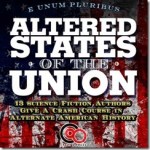
Altered-States-promo-art-640_thumb.jpgAnd hoo-boy, have we got one for you: Altered States of the Union, edited by Glenn Hauman for Crazy 8 Press.  (Full disclosure: Jim Macdonald and I have a story in it.)

Altered States is a collection of original alternate-history stories in which the states of the USA are  . . . not as we know them.  It’s being crowdfunded through Indiegogo, and you can reach its web page here.

Rewards being offered for supporters range from a copy of the e-book version of the anthology (at the $5 level, or $3 for the first 20 early-bird pledges) to tuckerization* in one of the stories (at the $200 level; six chances are being offered.)  The official publication date is scheduled for the Shore Leave science fiction convention being held July 15-17, 2016, in Hunt Valley, Maryland.

So here’s your chance to be a patron of the arts and enable the publication of some good new stories.  (Lorenzo di Medici would totally have kicked in a florin or two.  You know he would have.)

*For those unfamiliar with the lingo of the sf tribe, “tuckerization” is the naming of a character in a story after a friend or fellow-fan.  The name derives from the early science fiction writer Wilson Tucker, who made a practice of giving his minor characters names in this fashion.  These days, opportunities to be tuckerized are often offered by writers for fundraising or charitable purposes.

One of the Good Things About Teaching

— and about editing, for that matter is the the opportunity to point with pride at a student’s (or client’s) success.

On this occasion, I can bask in the reflected glow from Viable Paradise alumna Fran Wilde’s winning of the Andre Norton Award for YA science fiction at the Nebula Awards just past for her novel Updraft, which also won the Baltimore Science Fiction Society’s Compton Crook Award for best first novel.

And as if that weren’t enough illumination, there’s a further glow coming by way of Debra Jess, another VP alumna and a Dr. Doyle’s Editorial client, for her novel Bloodsurfer, which is a finalist in two categories (best first novel and best paranormal) of the Greater Detroit Romance Writers of America Booksellers’ Best Award. The winners will be announced at this summer’s RWA convention.

Needless to say, I’m tickled pink for them both.

Sir Walter Scott’s Aunt Meets the Suck Fairy

Once upon a time there was a Scottish lawyer (and poet and novelist and, eventually, a baronet) who had an elderly aunt.  She was an avid reader, and had been for all her life, and as happens with avid readers, one day she took it in mind to revisit a remembered favorite author of her youth.  Because she was having trouble finding copies of the lady’s work, she wrote to her nephew requesting that he procure for her some of the writings of Aphra Behn.

Her nephew was somewhat take aback by the request, since Behn’s literary star had undergone considerable eclipse since the days of the Restoration, and her personal reputation along with it.  (She wrote for money.  She wrote about sex.  She had no visible husband, and possibly never did have one.  She had Catholic sympathies.  She worked as a spy for Charles II, who never did pay her for it – which is where the writing for money comes in.  Which was all to the good – except for the “not getting paid” part, of course – during the rock-and-roll years of the Stuart Restoration, but didn’t play quite as well under the House of Hanover.)

But young Walter Scott (for it was he) was a good nephew, and sent his aunt the books she had been looking for.  Not long after, she sent them back to him with a note requesting that he get rid of them:

 But is it not, she said, a very odd thing that I, an old woman of eighty and upwards, sitting alone, feel myself ashamed to read a book which, sixty years ago, I have heard read aloud for the amusement of large circles, consisting of the first and most creditable society in London!

What she hadn’t known was that in the intervening years, the works of her old favorite author had been visited by the Suck Fairy, that malevolent sprite who sneaks into the pages of fondly remembered texts and sprinkles them with (these days) racism and sexism and other problematic isms (or, for Sir Walter Scott’s elderly aunt, rude language and sexual content.)

The good news about the Suck Fairy, though, is that she doesn’t necessarily stick around forever.  It’s too late now for Sir Walter’s aunt to recover her fondness for the works of Aphra Behn, but present-day literary scholarship has recovered somewhat of Behn’s reputation, and no less a writer than Virginia Woolf said of her, in A Room of One’s Own:

All women together, ought to let flowers fall upon the grave of Aphra Behn… for it was she who earned them the right to speak their minds… Behn proved that money could be made by writing at the sacrifice, perhaps, of certain agreeable qualities; and so by degrees writing became not merely a sign of folly and a distracted mind but was of practical importance.

As for what writers of our own time will have their works visited by the Suck Fairy in twenty years, or fifty, or a hundred, and what writers whose works are now regarded as irrecoverably visited by suck will be rehabilitated by readers and scholars of a future age—

All I can say is, like so much about this business, it’s a crap shoot.
 

Where We’ll be Tomorrow

Jim Macdonald and I will be on a road trip down to Peterborough, NH, where we’ll be part of the group book-signing for the Conspiracy! anthology at the Toadstool Bookshop.

Our audiobook for the drive down and back is The Count of Monte Cristo.  Nineteenth-century doorstop novels make great road books, especially if you stick to the blood-and-thunder end of the spectrum.  We’ve already gone through Wilkie Collins’s The Moonstone and The Woman in White, both of which I can heartily recommend – among other things, Collins has a lot fewer female characters whom I want to slap silly than, say, Dickens does.  I don’t think we’ll be trying anything by Hardy, or by Henry James, though; the blind malice of the universe and the delicate delineation of interior states aren’t exactly the best antidotes for highway hypnosis.

(Or maybe for some people they are.  Everybody’s reaction to a work of literature is different, and is their own.)

Next up, after we’re done with Edmond Dantès and the gang, will be a handful of Welcome to Night Vale podcasts.  After that . . . who knows?  Maybe The Three Musketeers.

Presented for Your Amusement

A bit of seasonal humor, from the archives of The Toast:  The Passive-Aggressive Guide to Book Gifting.  As always, read the comments, too; The Toast is one of the few sites on the net where doing so adds value to the experience, rather than making the reader despair of humanity.

Also, a research source:  The New York Public Library has put up a collection of digitized theatrical ephemera.  That hyperlink goes to an article about the collection; the actual archive is here.  They’ve got all sorts of stuff: programs, posters, correspondence, photos.